Classroom Design
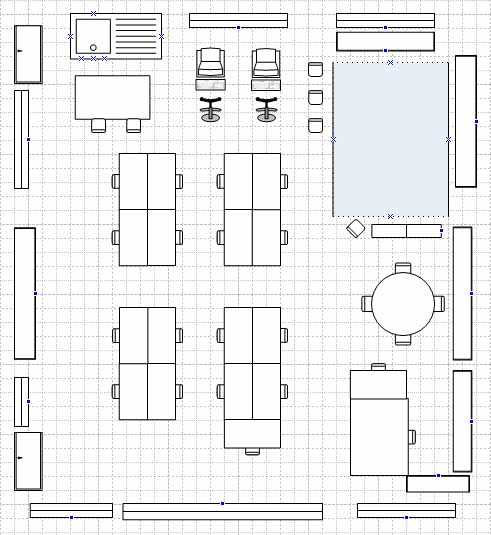
I visited hundreds of different classrooms the past few years. The classrooms I remembered the most were the ones which I constantly bumped my head into posters, shoeboxes, and even spin-wheels. In some rooms, there were so much visual aids and students work, that it was distracting. However, most teachers told me that was what the school, the region, and everyone was looking for. It was the “ideal classroom”. I intend on meeting my school’s classroom “checklist” but I will arrange my room so it is conducive to education. I moved furniture around in my design many times until I finally decided on this model. It is based on the many classrooms I observed throughout the years.
The design is arranged to accommodate a 12:1:1 class. There are two doors, which is very unlikely, but possible. When the class enters the room, to the left they will find a check-in/ check-out board, classroom jobs for the week, and a monthly calendar. This is the first location students stop at when they come into the room, they switch their check card from red to green to show they are in attendance, and make sure they know their classroom job. This gives students a sense of responsibility and teaches them life procedures (check-in/out). Once they check in, they proceed to the closet and leave their book bags, and coats. Any students with lunch will proceed to place it in a bin to the right of the sink. Students without lunch will proceed to their assigned tables.
The tables are in groups of fours. Three students will be assigned to each table, leaving one seat for a paraprofessional or teacher to sit and assist students in small-group work. The board in the front is effective for whole group lessons where students need to work at their desks. There is also an extra desk in the front for placing materials, handouts, teacher’s books, etc so they are reaching distance for an instructor using the front board. Rules and the daily flow of the day will also be located on the front board near the door and visible to all students in the class. This makes everything clear and without surprise to students. A clock will be situated near the schedule. Tables are also far enough from the windows to avoid distractions.
To the far left, there is a rug area which whole group discussion and instruction can also take place. The class can easily reach this area from their seats, through the wide aisles. I have a white-board easel in the front to conduct a lesson. There are also seats on the side of the rug to suit those who have asthma or allergies to the rug. They can also serve as seats to those who cannot behave on the rug. Of course, the distinction will be made beforehand.
Individual instruction can be conducted in one of three locations, at table in the far left, the desk connected to the teachers desk, or the round table near the teachers desk. This provides a place where either the paraprofessional or teacher can provide 1 to 1 help away from groups, in privacy. It can also serve as an area for conferences.
Several centers are located at back of the room. On the left bulletin board you will find the math and science board. It will also contain students’ work in the subject area. The reading center will be in the same location as the class library. Student can read on the rug. The bulletin board in the back will also contain written works of students. The writing center will be the round table near the teacher’s desk. Taped to the table will be writing guidelines and hints. The teacher at his /her desk can closely monitor students in this area. Social studies will be on the board in the front, near the teacher’s desk. This will include daily news articles, student reporters, etc. The technology center will be located where the computers are, and the bulletin board behind them will contain computer guidelines and technological information.
As you can see, this classroom is designed to accommodate all students in the classroom. A system is set up to help all students, whether in groups, as a class, or as individuals. There will also be effective classroom management because everything is clearly presented. Students can see their weekly jobs, the flow of the day, the clock, and rules all without looking through a lot of clutter. I can also see all students from the front of the room, the teacher’s desk, and rug chair. Student will be aware of my presence regardless of instructional setting. I also have my needed materials within reach. There will be limited distractions from the windows, since they are seated far away from them. All this will make the classroom setting more conducive to education.
 Return
to Homepage
Return
to Homepage